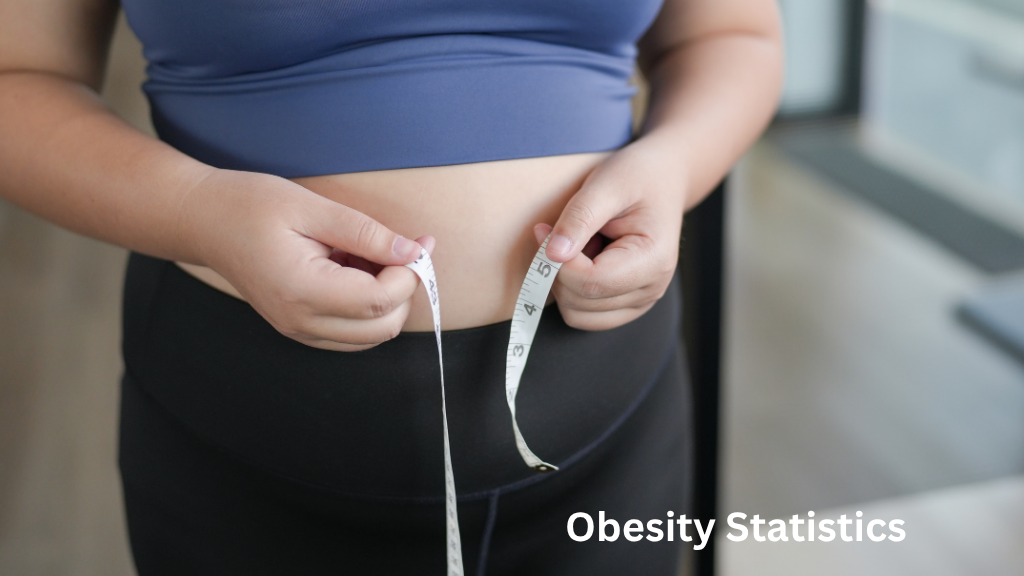

The world is plagued by obesity; it has become more common and prevalent more than ever due to social and structural factors like the increase in production of processed foods, work demands to increase income due to the rising costs of goods which limit people from movement and exercise, and barriers to food sources that are healthy and nutritious.
However, obesity itself is not the problem. The problem lies in the chronic diseases, like diabetes or high blood pressure, that results from a person being obese. In order to determine if a person is obese, one has to look at the Body Mass Index (BMI), an indicator which accounts for the person’s age, height, and current weight to determine whether one is Underweight, Normal, Overweight, or Obese. A BMI of <30 is considered Obese. To determine one’s BMI, there are countless BMI calculator online which one could use.
According to the World Health Organization, in 2022 16.5 million of adults are considered overweight. What this suggests is that 20% of the world’s population are overweight. In the same year, WHO’s study revealed that 16% of adults, meaning those with ages 18 and above, are obese. In a report released by the American Society for Metabolic and Bariatric Surgery, they have found out that the prevalence of obesity among adults in the US is at 40%. What this means is that 137.4 million are obese in the US with a current population of 343.6 million. This number suggests that close to half of the adult population are obese in the US and the numbers are growing.
In a recent ABC News, the Lancet Global Commission found out that more than 75% of the US population could be obese based on a new definition, which is based on BMI and now takes into account waist weight gain measurements.
Not only the adults are obese, but children as well. As per the Center for Disease Control, 1 in 5 children are obese. The same report also highlights how 1 in 8 preschool children have obesity. To quantify this, it means that 1 in 8 children aged 3-5 years are obese. But the Center for Disease Control clarified that this number has improved in recent years. There is no specific data though as to how many children are obese in the year 2025-2026.
It has been discovered that certain marginalized groups are prone to being obese. There are structural and social causes why certain groups have a high prevalence of obesity. For example, the Center for Disease Control shared in a 2019 report that almost half, or 49.9% of non-Hispanic Black adults are obese. Meanwhile, Hispanic people falls at 45.9%, followed by non-Hispanic White people with a prevalence of 41.4%. The lowest prevalence of obesity when it comes to race are the non-Hispanic Asian individuals which is pegged at 16.1%.
The 2022 data by World Health Organization share a similar statistic between men and women who have obesity. When accounting for the world’s adult population, 43% of men as compared to 44% of women are obese. In this data, there’s no stark contrast between the prevalence of obesity in gender. However, this data changes when taking into account the US population. The Office on Women’s Health (OASH) reveals that 2 in 3 women in the US have obesity.
The Center for Disease Control also shared that educational level is one of the factors that contribute to a person having obesity. Data shows that those with a bachelor’s degree have a lower prevalence of obesity, which is at 31.6%. As compared to men and women who finished high school, with a percentage of 44.6% to 45% prevalence of obesity respectively, this suggests that as a person spends more time in school, there would be information and knowledge that would aid a person to manage weight and health.
In the United States, the medical cost of obesity is pegged at $173 million. This includes people who have insurance and those who pay out of pocket. In case of people who do not have insurance and who also live with chronic diseases as a result of obesity, this becomes a compounding problem that affect an individual’s day to day functionality. It is therefore a health concern to manage one’s weight. Though there are complex factors relative to one’s age, gender, race, and education level, one should approach obesity management holistically, taking into account reasons why people become obese.
As mentioned above, when obesity is not managed, this would result in chronic diseases for children being susceptible to type 2 diabetes and high blood pressure. These children would also grow up as adults with the same susceptibility to chronic diseases and the risk of having specific cancers.
But there is hope when it comes to weight management. According to experts, exercise and diet are still key. However, it is also helpful to ask support from experts, like nutritionists and weight management coaches for example, to guide you into a healthier way of life.
CDC. (2024, January 23). About obesity. CDC. https://www.cdc.gov/obesity/php/about/index.html
Mass General Brigham Communications. (2025, October 15). Researchers report “astounding” obesity surge in U.S. Harvard Gazette. https://news.harvard.edu/gazette/story/2025/10/researchers-report-astounding-obesity-surge-in-u-s/
Obesity Facts in America. (2022, December 22). Healthline. https://www.healthline.com/health/obesity-facts#social-factors
World Health Organization. (2025, May 7). Obesity and Overweight. World Health Organization. https://www.who.int/news-room/fact-sheets/detail/obesity-and-overweight