
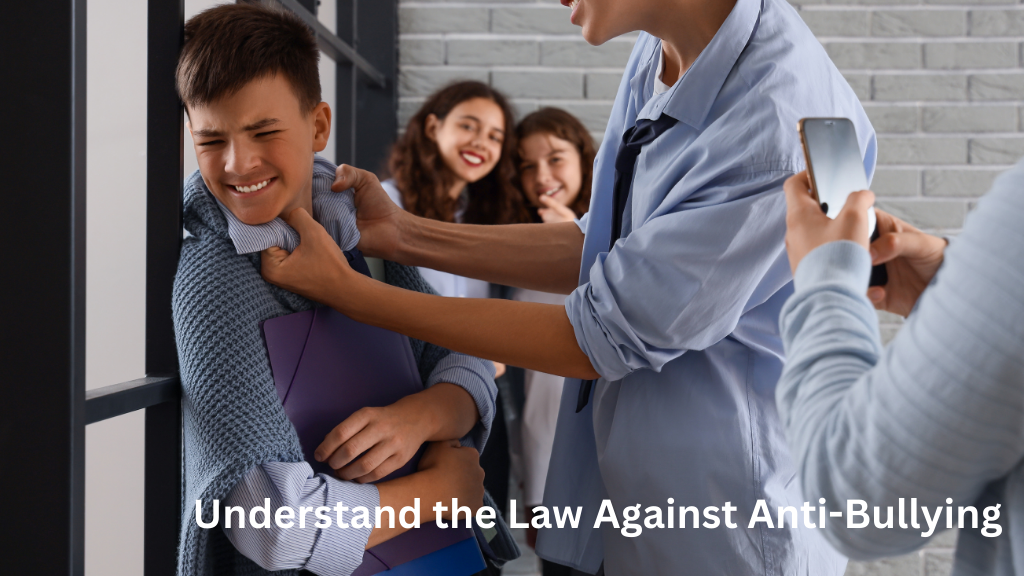
Understand the Law Against Anti-Bullying
Bullying is not a social, emotional, or behavioral problem exclusively, but also a major legal concern. In the United States, there is a set of federal legislations, state and local school policies that are aimed at safeguarding people, especially children and adolescents, against bullying, harassment or intimidation. These legislations acknowledge the fact that bullying may disrupt the safety, dignity, education and well being of an individual.
It is necessary to know the legal context of bullying among students, parents, educators, school administrators, and victims. Once people know what they can and cannot do according to the law, they will be in a better position to realize that some unlawful actions are going on and take the right steps to keep themselves safe or receive compensation as such.
This guide discusses how the laws against bullying work, what does exist in terms of federal, state, and local laws, and how these laws are implemented in schools and learning institutions. This article offers a concise, well-organized, and easy-to-understand summary of the law concerning bullying whether you are the victim, a witness, or simply want to understand what the law entails at the time of bullying.
Why Laws Address Bullying
Bullying may be of great and permanent damage. The victims can develop emotional distress and anxiety, depression, social withdrawal, academic challenges, physical harm, and mental health problems in the long run. In extreme situations, bullying has been known to have contributed to trauma and lifelong impacts.
Due to such severe consequences, legislators and organizations understand that bullying is not merely an inappropriate or ungrateful practice. It poses a threat to individual security, equal opportunities to education, and civil liberties. In cases where bullying is overlooked or poorly managed, it may establish unsafe conditions and strengthen discrimination or abuse of power.
Anti-bullying laws aim to:
- Prevent harassment, intimidation, or injury of individuals by others.
- Provide inclusive, supportive and safe learning environments.
- Hold institutions and schools responsible in prevention and response.
- Give easy reporting, investigation and resolution mechanisms to the victims.
The legal frameworks also assist in determining what is considered bullying and also clarify the roles of schools, teachers, administrators and the governing bodies in the prevention and response of such a behavior.
Federal Laws that Address Bullying
The United States has no single federal law that is explicitly called an anti-bullying law. But there are a number of federal civil rights laws that provide protection where bullying crosses with discrimination or harassment based on characteristics of protection.
In the case of bullying of an individual due to their identity, and affecting their access to or ability to be involved in educational programs, the behavior may be a violation of federal law.
Civil Rights Laws
Federal civil rights laws prohibit discrimination and harassment based on specific protected classes. Bullying can be considered to be unlawful harassment in cases when it is extreme,pervasive or persistent and limits the student’s ability to learn or feel secure at school.
Under federal law, the following are the characteristics that are protected:
- Race or color
- National origin
- Sex (Sexual harassment)
- Disability
- Religion
In cases where bullying is founded on any of these attributes or a combination of them, the schools are legally obliged to exercise prompt and efficient behavior to bring to an end the harassment, to make sure that it does not recur and to manage the effect it has on the victim.
Role of the U.S. Department of Education
The U.S. Department of Education is very important in the enforcement of federal civil rights in educational environments. The Office of Civil Rights (OCR) of it checks allegations of discrimination, including the unlawful harassment of bullying.
In the event that a school is aware of, or ought to be aware of discriminatory bullying, and does not act accordingly, it may be found guilty of a violation of federal law.
Schools are expected to:
- Timely response to investigate reported incidences.
- Effectively take action to prevent harassment.
- Prevent future occurrences
The inability to comply with such requirements may lead to enforcement, remedial penalties or loss of federal funding.
State Anti-Bullying Laws and Policies
The laws on bullying exist in all U.S. states and are likely to be relevant in the case of the school. Although the details, and the demands, of these laws differ by state, this legislation sets minimum standards regarding the way schools should prevent and address bullying.
State legislations tend to extend safeguards to what federal laws mandate and offer more precise definitions and protocol that best suit schools.
Common Components in State Laws and Regulations
The state anti-bullying legislation differs, however the majority of them share such aspects:
- Decision of what bullying involves.
- Introduce anti-bullying strategies in schools.
- Procedures of reporting and investigation.
- Remedial measures or disciplinary measures.
- Striking back against reporting protection.
Cyberbullying and off-campus behavior which interferes with school is also expressly handled in many states.
It is notable that the majority of state laws do not prescribe any punitive measures, but leave schools at liberty to decide the manner of suitable retaliation.
Definition of Bullying in the Law
The legal definitions of bullying usually have three fundamental items:
- Intentional behavior– The behavior is premeditated and not something accidental.
- Repetition -The action is repeated, or can be repeated.
- Power imbalance – The individual who is involved in bullying is physiologically stronger, socially influential, or psychologically more powerful.
These factors make the difference between bullying and normal conflict or disagreements of isolated conflicts. This distinction should be known to victims, educators, and administrators to define whether the conduct is below the legal criteria of bullying.
School District Policies
Besides the state laws, the local school districts must have their own anti-bullying policies to be created and implemented. These policies give the legal requirements into the practical and school-level procedures.
School district policies are lawful and give directions to the students, staff and parents on the way bullying is handled in the school system.
What School Policies Usually Cover
School anti-bullying policies commonly include:
- Bullying and harassment definitions and examples.
- Student, parent and staff reporting procedures.
- Investigation processes and schedules.
- Punitive measures and remedial reactions.
- Disciplinary measures and corrective responses
- Counselling or support services for victims
These policies are usually consulted in the student hand books or on the school websites and can be enforced in the school community.
Cyberbullying and the Law
The use of social media, messaging platforms, and other digital communication tools has made cyberbullying a very serious issue. Cyberbullying is now expressly covered in the anti-bullying legislation in many states. Many states now explicitly include cyberbullying within their anti-bullying laws.
Cyberbullying can be done in the form of harassment, threats, humiliation, or dissemination of harmful material using electronic means.
Legal Considerations for Cyberbullying
Cyberbullying poses some distinctive legal issues in that it could:
- Occur outside of school hours
- Take place off-school property.
- Engage anonymous persons.
Despite these factors, schools may still have the authority and responsibility to intervene when online conduct substantially disrupts the school environment or threatens student safety.
Criminal Laws and Bullying
In other instances, the bullying conduct can also be in contravention of criminal laws. This is
normally witnessed when the behaviour relates to threats, physical abuse, stalking, or intense harassment.
- Bullying-related criminal behaviors include:
- Assault or battery
- Criminal harassment
- Hate crimes
- Violence/threat of violence, intimidation.
At this point in time, the police can intervene in the case of bullying and criminal consequences might be added to the disciplinary measures of the school.
Bullying and Students with Disabilities
The federal disability rights laws afford extra protection to students with disabilities. Bullying of a student because of his disability or the inability to obtain education could be a violator of such laws.
Based on the guidelines provided by the U.S. Department of Justice, bullying that involves threats, violence, or hate-motivated behavior may also be considered within the scope of criminal law and may require the intervention of law enforcement.
Schools must make sure that:
- The disabled students can access educational opportunities equally.
- Bullying does not restrict access to programs and services.
- Individualized Education Programs (IEPs) are discussed and modified in case the bullying influences the learning.
Lack of action in disability-based bullying may lead to grave legal ramifications to schools and districts.
Responsibilities of Schools
Schools are in the middle of bullying prevention and solutions. In accordance with the majority of states and federal recommendations, schools are supposed to engage in proactive and uniform measures to ensure a safe environment for all students.
School Responsibilities Include:
- Setting up and implementing explicit anti-bullying policies.
- Educating the employees to identify, eliminate, and react to bullying.
- Distributing secure and available reporting methods.
- Researching accidents and investigation in a timely manner and in a just way.
- Academic and emotional support of the affected students.
The schools that do not act accordingly may be subject to legal action and lack of confidence in society.
Reporting Bullying
This is important in that victims and families should know how and where to report bullying. In the majority of the school policies, there are certain reporting procedures that are established with an aim of ensuring that a timely action will be taken.
Ways to Report Bullying
Bullying may be reported:
- In writing
- In verbal form to an educator, counselor or administration.
- By way of anonymous reporting mechanisms.
- On behalf of a student by a parent or a guardian.
Report strengthening and facilitation of investigations can be achieved by keeping detailed records including dates, description, screenshot, and names of witnesses.
Protection Against Retaliation
Retaliation protection is incorporated in many anti-bullying laws. Retaliation happens when an individual is punished, threatened or victimized because of reporting bullying or even because it is part of an investigation.
Schools are required to:
- Keep track of revengeful conduct.
- Address it immediately
- Guarantee safety of reporting persons.
These protections will help the victims and those witness to raise their voice.
Legal Remedies for Victims
The bullied victims can also seek a number of solutions based on the level and type of the behavior.
Possible remedies include:
- Disciplinary measures in school.
- Official grievances to school districts.
- Complaints to federal agencies on civil rights.
- In some situations civil lawsuits.
Knowing these choices will enable the victims and families to make knowledgeable choices concerning how to go about it.
Role of Parents and Guardians
Parents and guardians are very important in helping children who are victims of bullying. Having knowledge of the law would enable the families to negotiate efficiently and see that the schools are fulfilling their legal responsibilities.
Parents can:
- Request and revise school policies.
- Record documents and messages.
- Follow up investigations and results.
- Enlist the services of legal or advocacy help when needed.
Children are usually better protected and resolved when the parents are actively involved.
Prevention Through Policy and Education
Laws against bullying focus on response rather than prevention. Bullying can be minimized by education and awareness programs to prevent its development into lawbreaking.
The preventive measures might involve:
- Programs of social-emotional learning.
- Clearly defined and congruous codes of conduct.
- Mentoring and peer support programmes.
- Staff training and awareness campaign
A robust prevention strategy brings about secure and more esteemed school societies.
How Anti-Bullying Laws Work Together
| Level | Purpose | Key Responsibilities |
| Federal | Protect civil rights | Address discriminatory harassment |
| State | Set minimum standards | Require policies and procedures |
| School District | Implement policies | Investigate and respond to incidents |
Why Understanding the Law Matters
The legal framework of bullying will make people understand that they can define what is unlawful, demand their rights, and get assistance as soon as possible. It also encourages responsibility of schools and institutions that are in charge of safeguarding students.
In the case of victims, legal knowledge can:
- Validate their experiences
- Give clear action alternatives.
- Minimize loneliness and powerlessness.
In the case of schools and communities, it makes them safer and more inclusive.
Conclusion
Bullying is not only a problem with legal consequences but also an issue that is not personal in nature. Even though there is no one federal legislation that would tackle all types of bullying, a complex network of federal, state, and local laws collaborates in order to safeguard people and to secure safe educational conditions.
Through knowledge about the functioning of such laws, the people they safeguard and how the law is implemented, the victims, their families and educators can make informed actions towards prevention, reporting and resolution. Legal consciousness is an effective instrument to use in the quest to prevent bullying and foster dignity, safety, and respect of everybody.